
Carlsbad City Directory Holdings
The Carlsbad Public Library catalog record is the best starting point for the local run. It describes alphabetical residents and businesses, a street directory for householders and businesses, a numerical telephone directory, city information, and classified advertising. The record documents holdings from 1939 through 2026. It also says the collection is incomplete, specifically noting that years before 1939 and 1943 through 1945 are missing. Check the live item record or ask library staff about the location and status of a particular volume.
| Collection | Years | Where held | Access |
|---|---|---|---|
| Library directory holdings | 1939–2026 holdings | Carlsbad Public Library catalog | Item status and copy location vary |
| Hudspeth Carlsbad and Happy Valley directory | 1948 | FamilySearch digital book | Publicly viewable scan |
| Federal population census | Public through 1950 | NARA-authorized access channels | Dated household snapshot |
| Carlsbad Sanborn maps | 1900, 1905, 1909, 1913, 1921, 1930, 1943, 1950 | Library of Congress | Building and street context |
Use a dated printed volume as one layer of evidence. The directory can connect a printed name with an address, while a Sanborn sheet can describe the building and a census can describe a household on its own date. Those are different kinds of records and should not be treated as interchangeable.
See the library’s catalog listing before requesting a volume.
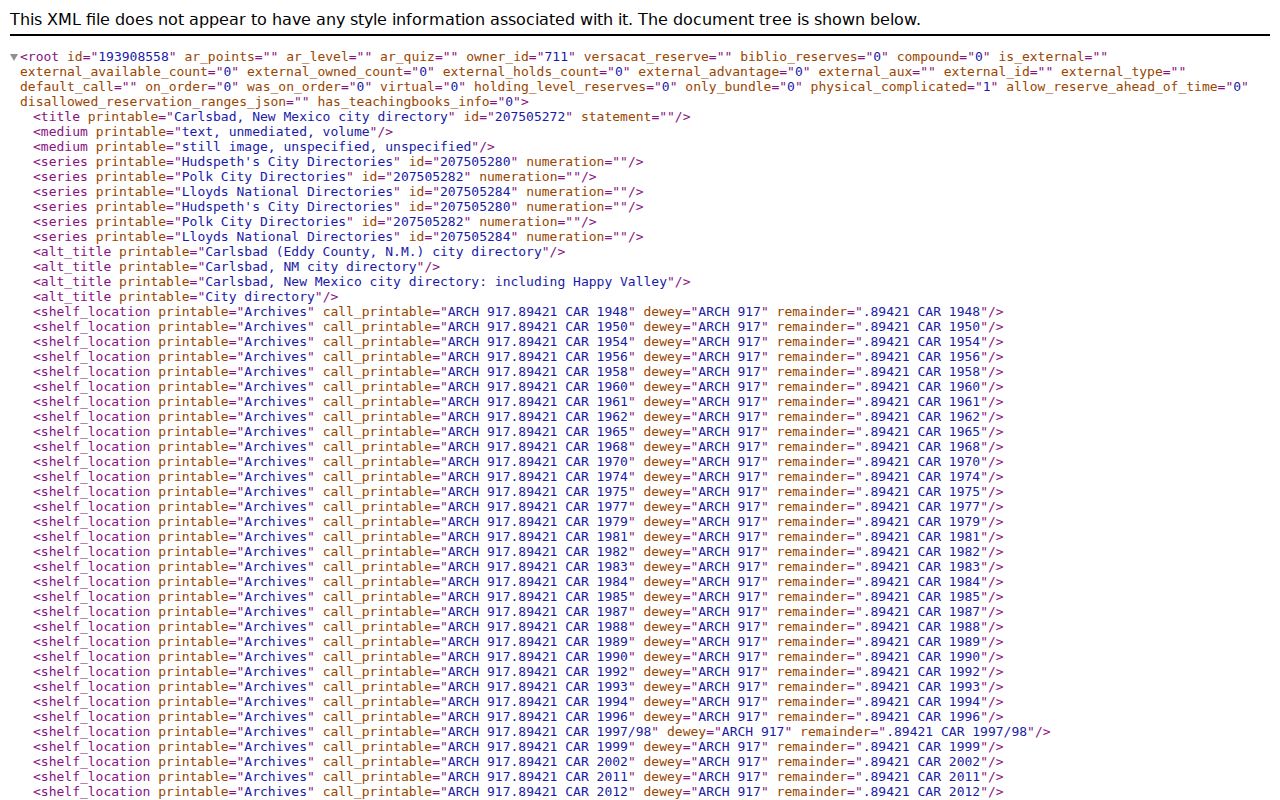
The catalog image is useful because it shows why a year-by-year request is safer than assuming an uninterrupted run.
Carlsbad City Directory Publishers
Publisher information helps explain why one Carlsbad printed volume may look unlike the next. The catalog identifies Lloyds National Directory Co. of Oklahoma City for 1939 through 1942. Hudspeth’s Directory Co. of El Paso appears for 1946 through 1964, followed by Hudspeth’s of Dallas for 1965 through 1972. R. L. Polk & Co. then appears in several city and office forms through the catalog’s publisher details ending in 2014. Holdings continue later, but the record does not supply publisher subfields after 2014.
- 1939–1942: Lloyds National Directory Co., Oklahoma City.
- 1946–1972: Hudspeth’s editions, first associated with El Paso and later Dallas.
- 1973–1996: R. L. Polk & Co. editions associated with Dallas and then Detroit.
- 1997–2014: Polk entries associated with Livonia, Ralston, and Papillion.
Layouts, abbreviations, and section order can change with the publisher. Preserve the title page, edition year, and publisher before comparing a listing with another volume. The 1948 Hudspeth title also explicitly includes Happy Valley, which makes that place name worth trying beside Carlsbad when a search stalls.
Open the 1948 Hudspeth scan to inspect the volume itself.
That volume is a readable example, not proof that every Carlsbad directory year has been digitized.
Note: The catalog calls the collection incomplete, so a missing search result can reflect a missing or differently cataloged volume.
Carlsbad City Directory Library Access
Carlsbad Public Library is at 101 S. Halagueno Street and publishes hours of 9 a.m. to 8 p.m. Monday through Thursday, 9 a.m. to 6 p.m. Friday and Saturday, and closed Sunday. The library links its catalog, HeritageQuest route, and Community Collection from its City page. For a historical request, ask for the Carlsbad, New Mexico and Eddy County local-history collection and identify the person, place, edition year, or publisher you need.
Ask separately about alphabetic directories, street or reverse listings, telephone books, yearbooks, obituary files, newspapers, maps, and plats. A volume may be cataloged under a publisher or local-history call number instead of a directory-collection label. Archive copies can be noncirculating or limited to a particular area or time. One archive copy is cataloged as bound upside down, a copy-specific quirk rather than a statement about the whole collection. Calling 575-885-6776 or emailing cplinfo@cityofcarlsbadnm.com before a visit can resolve the status of a specific volume.
Review the public library’s collection entry and catalog route first.
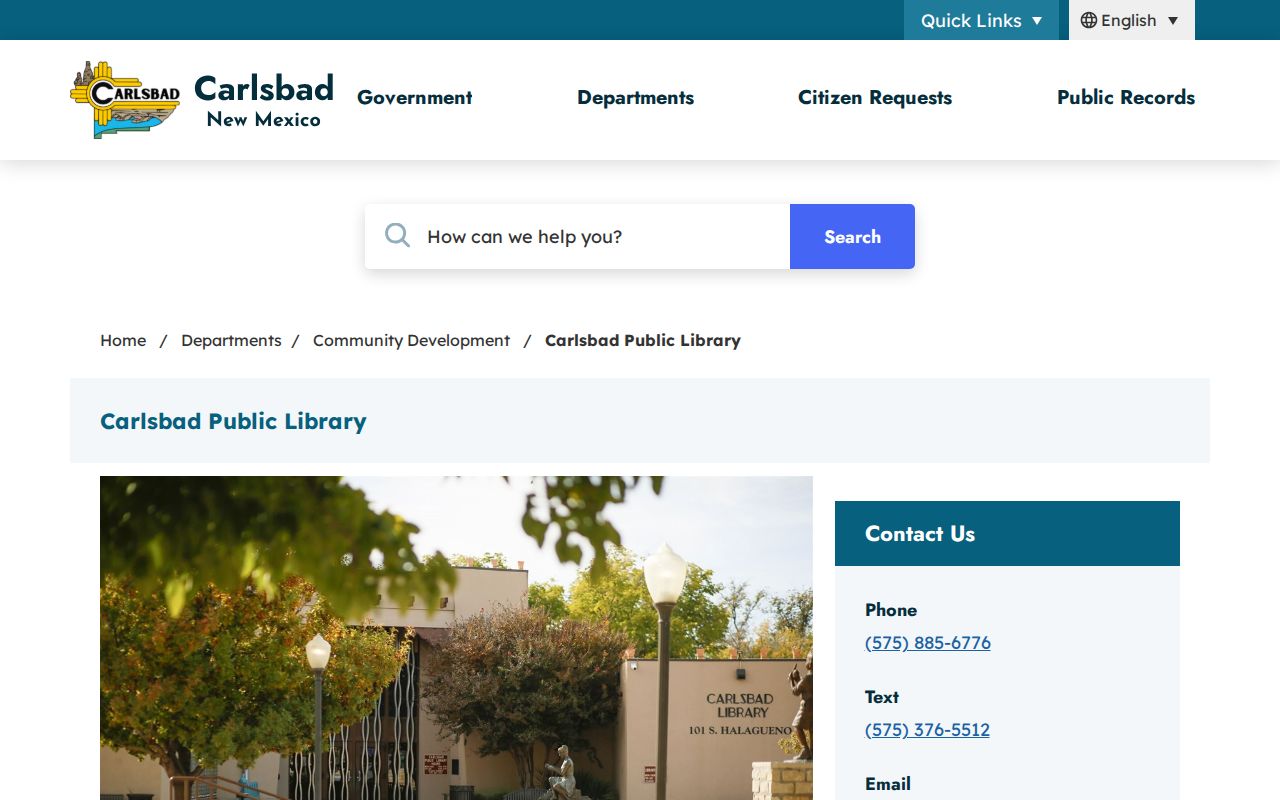
The library is the local shelf for the documented holdings, while the catalog controls whether a particular copy can be used.
Reading a Carlsbad City Directory Entry
A Carlsbad city directory should be read from the exact printed entry, not from a generic directory pattern. The verified 1948 volume has alphabetical residents and businesses, a street directory of householders and businesses, a numerical telephone directory, a classified business directory, city information, and advertising. Its research value grows when the title, publisher, coverage statement, page number, and nearby listing are recorded along with the name.
| Exact name and initials | Copy the form used in the volume, then retain alternate spellings for later searches. |
|---|---|
| Address | Record the printed residence or business address and check its street-directory counterpart. |
| Page and edition | Capture the page, title, publisher, year, and coverage statement so the finding can be checked. |
| Entry details | Note a spouse, widow mark, occupation, employer, telephone number, or boarding notation only when that exact entry prints it. |
| Nearby entries | Preserve surrounding listings when they help separate people with the same name. |
- Street directory
- An address-ordered part of a volume that can place listed householders or businesses along a street.
- Householder entry
- A listing associated with a household address, not a promise that everyone present was named.
- Abbreviation key
- The publisher’s explanation of shortened terms. Find it in the same volume before assigning a meaning to a mark.
A listed name is a dated printed assertion. Confirm a difficult identity with the corresponding address, a census entry, or another primary record rather than filling in unprinted family details.
Carlsbad City Directory Searches Under Eddy
Carlsbad was named Eddy until 1899. That change matters for city-directory, newspaper, catalog, and recorded-index research because a current-name-only search can miss the earlier description. Search both Eddy and Carlsbad, then try Happy Valley where the 1948 Hudspeth title makes it relevant. Keep the source’s own spelling in research notes even when a later record uses the modern city name.
The newspaper trail follows the same shift. UNM’s historic collection identifies the Eddy Current from January 16, 1896 through May 27, 1899, followed by the Carlsbad Current beginning June 3, 1899. A dated newspaper notice can add context to a directory finding, but title and date gaps mean it should never be treated as a complete historical database.
Note: The 1899 name change is a search instruction, not evidence that an individual entry under Eddy and one under Carlsbad name the same person.
Carlsbad Directory’s Happy Valley Volume
The publicly viewable 1948 Hudspeth book is titled Carlsbad (Eddy County, N.M.) city directory, including Happy Valley, buyers’ guide and complete classified business directory. It is 418 pages and has enough verified structure to support a careful inspection: alphabetical, street, numerical telephone, classified, business, city-information, and advertising sections. Start with the alphabetic entry, retain the printed address and abbreviations, then check the street listing and the nearest census date.
Happy Valley is a local indexing clue, not a shortcut to identity. Its appearance in the title means an address or family may be listed under a place term that a modern searcher would not expect. The volume’s layout also cannot be projected onto a Lloyds or Polk edition without checking that edition’s own front matter and key.
Trace Families With Carlsbad City Directories
Carlsbad city directories are especially useful between census years. Start with the earliest verified listing for a person or household, then move forward one available edition at a time. Record the address exactly, watch for initials and spelling shifts, and consult the street directory when an address-based check is useful. Pair each directory finding with the federal census that is closest in time. The most recent public decennial census is 1950 under the National Archives 72-year release rule.
- Identify the volume, page, name form, and address for the first located listing.
- Compare the next available directory years and note a changed address, spouse notation, or absence.
- Check the address in the street section when the volume contains one.
- Use the relevant census to test household composition, age, birthplace, and occupation on that census date.
- Close uncertain gaps with an obituary, cemetery inquiry, probate route, or a dated newspaper notice.
Absence has several explanations: a move, death, changed spelling, an unlisted person, or a missing volume. The Carlsbad previous residents path uses the same dated directory material beside a deed chronology when the question centers on one address.
Carlsbad Directory Image Leads
The Southeastern New Mexico Historical Society’s Near Loving’s Bend archive is a discovery channel for local photographs and historical context. Its site reports more than 20,000 public images and stored negatives spanning roughly 120 years, including material from closed photo shops and developed Argus negatives. The group reports no permanent public facility, so ask before visiting or relying on a research service.
Search captions by surname, place, event, year, or photo number, then confirm an identity or address with a primary record. The archive notes that captions were often derived from newspapers and can contain inaccuracies or inferences. A photograph can enrich a Carlsbad directory trail, but it does not substitute for the dated entry that placed a person at an address.
Explore the archive’s published holdings information.
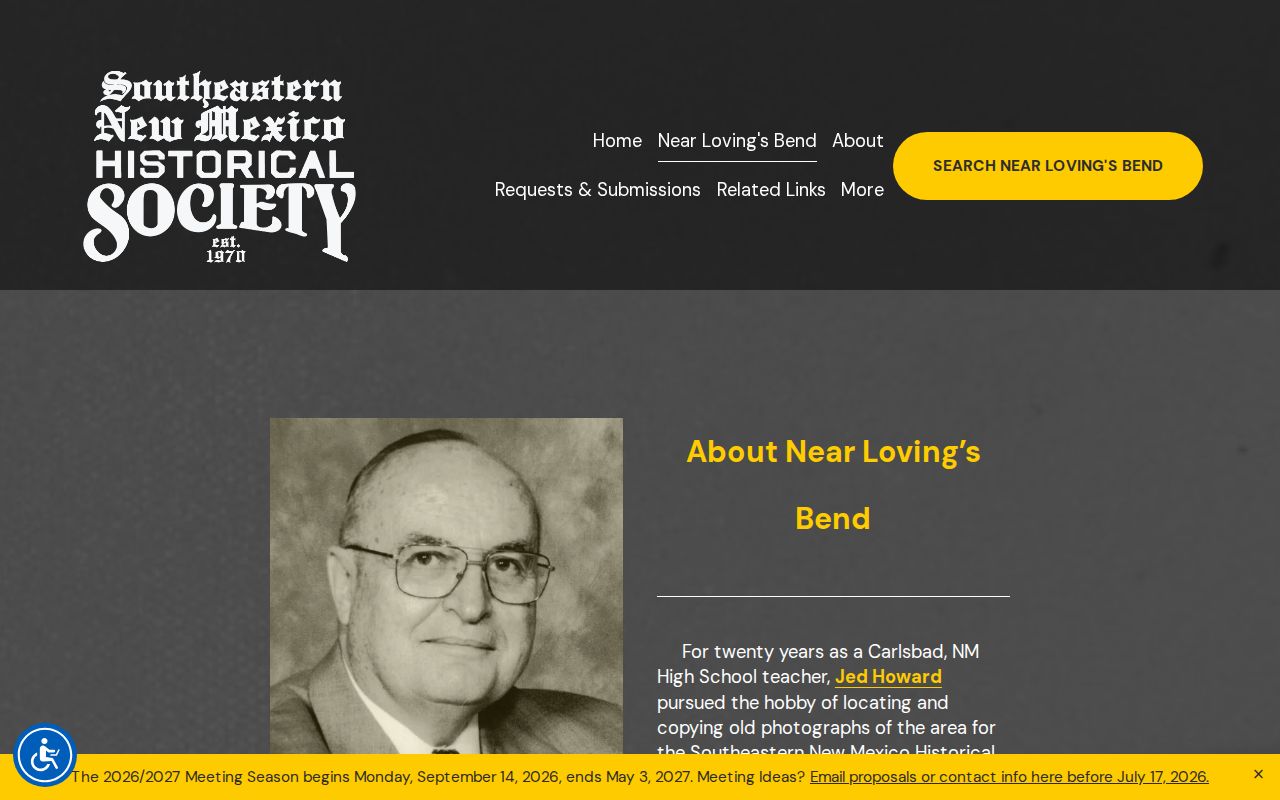
The archive broadens the local-history search without turning an image caption into a final identification.
Carlsbad Directory Archive Digitization
Carlsbad’s 2025–29 capital-improvement project list describes a Library Archive Digitization project for planning, design, purchase, and installation of a digitized public-library archives system. The list assigns $50,000 in 2025 and $50,000 in 2026, for a $100,000 first phase. That is a planned access improvement, not evidence that every local archive item or city directory is already online.
For now, use the catalog and staff contact as the primary route for the printed holdings, use the known 1948 scan as a separate digital source, and keep a note of every edition that was actually checked. This preserves the difference between a confirmed volume, a catalog lead, and a future digitization project.